

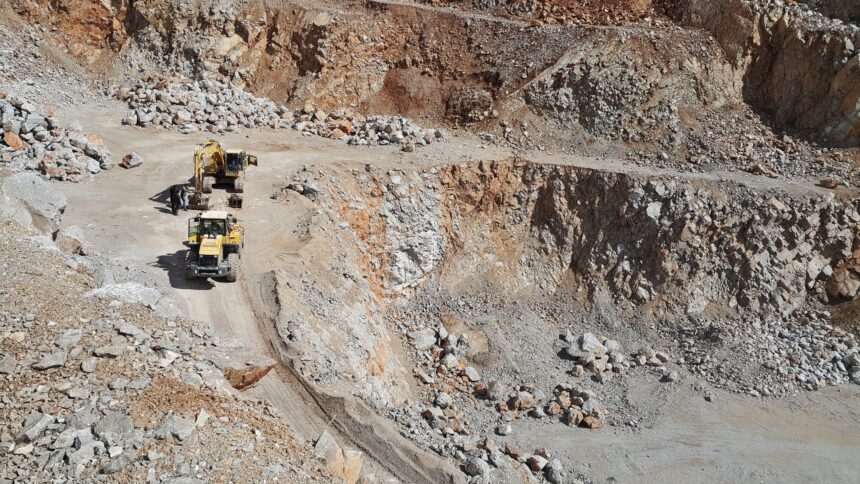
Mining has always required careful observation of the ground beneath the surface. Today, increasingly sophisticated technologies allow specialists to study mineral deposits, monitor equipment, and evaluate operational conditions with greater precision. Copper Mining is evolving through these developments, creating new opportunities to improve efficiency, safety, and environmental management.
How Technology Begins Before Extraction
Technological innovation plays a significant role long before mining equipment reaches a mineral deposit.
Exploration specialists collect geological information and transform it into detailed models of underground conditions.
These models support decisions about deposit boundaries, rock characteristics, and possible extraction methods.
Three-Dimensional Geological Modeling
Three-dimensional modeling combines drilling information, geological observations, and analytical results.
The resulting representations help specialists visualize complex underground formations.
Better geological understanding can reduce uncertainty, although subsurface conditions may still differ from predictions.
Modern Equipment and Operational Monitoring
Copper mining operations depend on equipment capable of performing demanding tasks under challenging conditions.
Monitoring systems can collect information about machine performance, operating temperatures, and maintenance requirements.
These measurements help workers identify developing problems and plan maintenance activities.
Predictive Maintenance
Predictive maintenance uses equipment data to recognize patterns associated with wear or potential failure.
Rather than relying exclusively on fixed maintenance schedules, operators can assess equipment condition more directly.
This approach may reduce unexpected interruptions and improve resource utilization.
Automation and Worker Safety
Automation is becoming increasingly relevant in mineral extraction.
Certain systems can assist with equipment movement, drilling accuracy, and repetitive operational tasks.
However, automation requires appropriate supervision, reliable communication systems, and clearly defined safety procedures.
Remote Equipment Operation
Remote operation allows personnel to control selected equipment from locations separated from the immediate work area.
This can reduce exposure to certain operational hazards.
The effectiveness of remote systems depends on equipment design, communication reliability, and worker training.
Improving Mineral Processing
After extraction, copper-bearing material must undergo processing to separate valuable minerals from surrounding rock.
Processing methods depend on the mineral composition and physical characteristics of the material.
Technological improvements can help operators monitor recovery performance and manage processing conditions.
Data-Driven Process Control
Sensors and analytical systems provide information about material characteristics and processing performance.
Operators can use these measurements to make adjustments that support consistent operation.
Careful process control also helps identify opportunities to reduce unnecessary material handling and energy consumption.
Environmental Monitoring Through Technology
Environmental responsibility remains an essential part of copper mining.
Monitoring systems can measure selected water-quality indicators, track environmental conditions, and provide information about operational performance.
Remote sensing technologies may also help document land changes over time.
Understanding Monitoring Limitations
Monitoring provides valuable evidence, but collecting data alone does not guarantee environmental protection.
Information must be interpreted accurately and followed by appropriate action.
Effective environmental management combines technology, engineering controls, inspections, and regulatory requirements.
The Importance of Skilled Professionals
As technology advances, mining operations require workers with expertise in geology, engineering, equipment maintenance, environmental science, and data analysis.
Digital systems support human decision-making rather than replacing every professional responsibility.
Training remains particularly important when unfamiliar equipment or operating procedures are introduced.
Building Technical Knowledge
Technical education helps workers understand both equipment capabilities and limitations.
Workers who can interpret operational information are better positioned to recognize abnormal conditions.
Continuous learning therefore supports safety and adaptability.
Future Opportunities for Innovation
Copper mining may benefit from further advances in sensor technology, geological interpretation, and operational modeling.
These developments could improve the understanding of complex deposits and support more informed resource management.
However, every innovation must be evaluated against actual geological and operational conditions.
Conclusion
Copper Mining is becoming increasingly connected to digital technology, advanced equipment, and detailed environmental monitoring. These developments offer opportunities to improve decision-making throughout mineral extraction.
The greatest benefits arise when technological innovation works alongside skilled professionals, strong safety practices, and responsible environmental planning.