

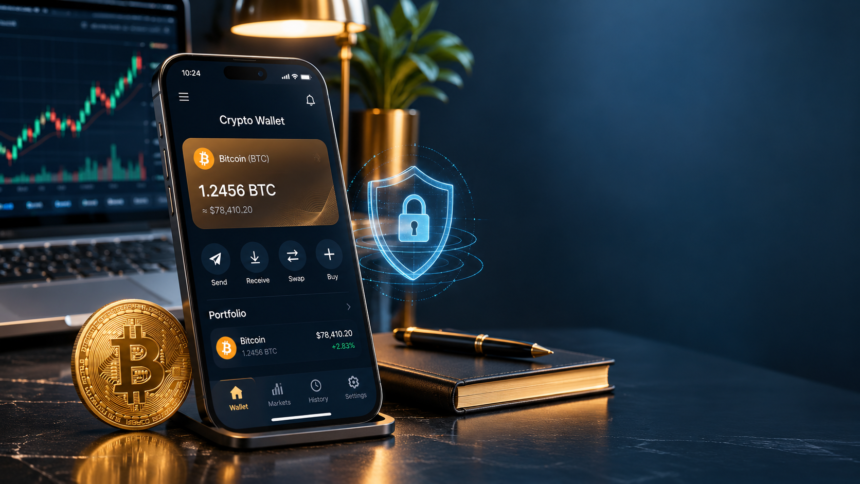
FintechZoom.com Bitcoin Wallet is a search term commonly associated with FintechZoom’s guides to Bitcoin storage, wallet security, and cryptocurrency management. FintechZoom.com provides financial news and educational content about Bitcoin wallets, but a separate, official Bitcoin wallet application operated by the website could not be verified. Readers looking for a place to store Bitcoin should understand the difference between wallet information and an actual wallet service.
Choosing a Bitcoin wallet is an important decision, especially when real money is involved. A good wallet should offer reliable security, straightforward transactions, and a recovery method that protects your funds if something happens to your device.
This guide explains what FintechZoom offers, how Bitcoin wallets work, which features matter, and how to protect your cryptocurrency from common mistakes.
What Is FintechZoom.com Bitcoin Wallet?
The term FintechZoom.com Bitcoin Wallet generally refers to Bitcoin wallet information and educational resources available through the financial technology website FintechZoom.com.
FintechZoom covers topics such as cryptocurrency markets, Bitcoin prices, blockchain technology, digital finance, and wallet security. Its wallet-related articles help readers understand different storage options and the factors involved in choosing one.
However, reading about a wallet on FintechZoom is not the same as opening a wallet account. To receive, store, or send Bitcoin, users need a separate wallet application, hardware device, or custodial service.
This distinction matters because an unfamiliar website or application might use a recognizable financial name without having any official connection to it.
Does FintechZoom.com Offer a Bitcoin Wallet?
FintechZoom.com publishes guides about Bitcoin wallets, including information on software wallets, hardware wallets, private keys, and cryptocurrency security.
There is no independently verified official FintechZoom.com Bitcoin wallet application identified in the reviewed website resources. The website primarily presents itself as a source of financial information rather than a provider of cryptocurrency custody.
Visitors can use its educational articles to understand wallet choices, but they should not assume that any application advertised under the FintechZoom name is an authorized product.
Before installing a wallet, verify the developer, official website, supported devices, and security documentation. Never transfer Bitcoin to an unfamiliar platform simply because its name appears related to a financial news website.
How Does a Bitcoin Wallet Work?
A Bitcoin wallet is a digital tool that allows users to manage the private keys associated with their Bitcoin.
Although people often describe wallets as places where Bitcoin is stored, the coins themselves are recorded on the Bitcoin blockchain. The wallet manages the cryptographic information needed to authorize transactions.
When someone sends Bitcoin, the wallet uses a private key to create a digital signature. The Bitcoin network then checks whether the transaction follows its rules.
A wallet typically provides three essential functions:
- Receiving Bitcoin: Generates addresses or payment requests that others can use to send funds.
- Sending Bitcoin: Allows the owner to authorize payments to another address.
- Managing transactions: Displays balances, payment history, and transaction confirmation details.
Most modern wallets handle these technical processes automatically. Users mainly need to understand how to protect their keys and check transaction details before confirming payments.
Types of Bitcoin Wallets
Bitcoin wallets are available in several forms. Each type offers a different balance of convenience, security, and control.
Mobile wallets are applications installed on smartphones. They are useful for checking balances, receiving payments, and making everyday transactions. Their convenience makes them attractive to beginners, although phone theft, malicious applications, and device compromise remain concerns.
Desktop wallets run on computers and may provide additional transaction controls, privacy features, and hardware wallet integration. Their security depends heavily on the computer’s condition and the software being used.
Hardware wallets are dedicated physical devices designed to protect private keys. They generally keep the keys isolated from internet-connected computers, reducing exposure to many online threats. These devices are commonly used for long-term Bitcoin storage.
Web wallets are accessed through a browser. Some are custodial services, while others allow users to manage their own keys. Their security and recovery arrangements vary considerably.
Paper wallets involve keeping private key information on paper. Although they can provide offline storage, older paper-wallet methods introduce risks during key generation, spending, and recovery. Modern hardware wallets are generally more practical for people seeking offline protection.
The most suitable wallet depends on how frequently someone plans to use Bitcoin and how comfortable they are with managing security.
Hot Wallets vs. Cold Wallets
One of the most important differences between Bitcoin wallets is whether their private keys are exposed to internet-connected environments.
A hot wallet operates on a connected device. It offers quick access and is convenient for regular transactions. Mobile and desktop applications are common examples.
A cold wallet keeps private keys offline. Hardware wallets and properly configured offline signing systems are common examples.
Cold storage can reduce the risk of online attacks, but it does not remove every threat. Someone who steals a recovery phrase may still be able to access the Bitcoin without possessing the original device.
For many users, a sensible arrangement is to keep a smaller amount in a mobile wallet for occasional payments and use a properly secured hardware wallet for longer-term holdings.
Understanding Wallet Ownership
Before choosing any Bitcoin wallet, it is important to understand custodial and non-custodial storage.
A custodial wallet is managed by a third party, such as a cryptocurrency exchange. The service controls the private keys and maintains records of customer balances.
This arrangement may offer account recovery and familiar login features. However, users depend on the provider’s security, financial condition, and withdrawal policies.
A non-custodial wallet allows users to control their own private keys. This reduces dependence on another company but creates a significant responsibility: protecting the wallet’s recovery information.
If the private keys and recovery information are permanently lost, access to the Bitcoin may also be permanently lost.
Neither approach is automatically suitable for everyone. The important question is whether the user understands who controls the keys and what could happen if access is interrupted.
Important Bitcoin Wallet Features
A reliable wallet should provide more than an attractive interface. Its security arrangements and everyday usability deserve careful attention.
Private key control: Check whether the wallet gives you direct ownership of the keys or requires you to trust a separate custodian.
Backup and recovery: A good non-custodial wallet should explain how its recovery process works and how to store backup information securely.
Clear transaction details: The wallet should display receiving addresses, payment amounts, and applicable fees before confirming a transfer.
Software maintenance: Regular security updates help address vulnerabilities and compatibility issues.
Reputation and transparency: Look for established development teams, accessible documentation, and independently reviewable security information.
Device compatibility: Make sure the wallet supports the operating system or hardware you intend to use.
Fee controls: Some wallets let users select transaction fee rates or adjust payments that remain unconfirmed.
Bitcoin.org provides a wallet selection tool that allows users to compare choices using criteria such as control, privacy, transparency, and security.
How to Set Up a Bitcoin Wallet
Setting up a Bitcoin wallet is usually straightforward, although the exact procedure depends on the provider.
Step 1: Select a wallet. Choose a reputable wallet that supports Bitcoin and matches your preferred device and security requirements.
Step 2: Visit the official source. Download software from the developer’s verified website or its official application listing. Be cautious with advertisements, sponsored download links, and imitation websites.
Step 3: Create a new wallet. Follow the setup instructions. Non-custodial wallets generally generate private keys and may provide a recovery phrase.
Step 4: Secure the backup. Write down the recovery phrase exactly as instructed and store it somewhere private and physically secure. Do not save it in screenshots, cloud notes, or ordinary email messages.
Step 5: Enable available protections. Configure a strong device password, application lock, or other supported security settings. For custodial accounts, enable strong multi-factor authentication.
Step 6: Test the wallet. Receive a small amount of Bitcoin and make sure the transaction appears correctly before transferring larger amounts.
A little care during setup can prevent expensive problems later.
How to Receive Bitcoin
Receiving Bitcoin normally starts by opening the wallet and selecting its Receive option.
The wallet will display a Bitcoin address, often together with a QR code. This address can be shared with the person or service sending Bitcoin.
Before requesting a transfer, confirm that the receiving wallet supports the network and transaction type being used. Bitcoin on-chain transfers and Lightning payments use different payment methods.
After the sender broadcasts the transaction, it may appear as pending until the Bitcoin network confirms it.
The required number of confirmations varies depending on the receiving service and the amount involved.
For privacy, use a fresh receiving address when your wallet supports it. Repeatedly sharing the same address can make transactions easier to associate with one another.
How to Send Bitcoin
Sending Bitcoin requires more attention because confirmed Bitcoin transactions generally cannot be reversed.
Start by opening your wallet and choosing Send. Enter the recipient’s Bitcoin address or scan their payment QR code.
Next, specify the amount and review the transaction fee. Some wallets allow you to choose a faster or slower confirmation target.
Before submitting the payment, carefully inspect the destination address. Malware can sometimes replace copied addresses with addresses controlled by attackers.
For a large transfer, sending a small test payment first can help identify mistakes.
Once the transaction is authorized and broadcast to the network, the wallet will usually display its status and a transaction identifier.
Keep in mind that an exchange may impose additional withdrawal procedures or fees beyond the Bitcoin network fee.
Bitcoin Wallet Fees Explained
Bitcoin transaction fees are not fixed. They depend mainly on transaction size and the demand for available space in Bitcoin blocks.
Fees are commonly expressed in satoshis per virtual byte (sat/vB). A satoshi is the smallest unit of Bitcoin, with 100 million satoshis making up one BTC.
When the network becomes busy, users may need to offer higher fees to obtain faster confirmation. During quieter periods, lower fees may be sufficient.
A wallet provider may also charge separate service fees, particularly when buying Bitcoin, exchanging cryptocurrencies, or withdrawing from a custodial platform.
Because FintechZoom.com has not been verified as a separate Bitcoin wallet provider, it would be misleading to describe a specific FintechZoom wallet fee structure.
Always review the actual wallet or exchange’s fee information before sending funds.
Is FintechZoom.com Bitcoin Wallet Safe?
Safety depends on the product or service actually holding the user’s Bitcoin.
FintechZoom’s educational articles can help readers learn about security, but the existence of wallet-related content does not establish the security of a separate wallet application.
A Bitcoin wallet should be evaluated through its key management, recovery process, software security, and provider reputation—not through the name of a financial information website.
A well-designed non-custodial wallet may give users greater control over their funds. However, that advantage depends on the owner protecting the device, private keys, and recovery information.
Hardware wallets can provide stronger protection against many online attacks, but they are not completely risk-free.
Anyone considering a wallet associated with the FintechZoom name should verify its authenticity independently before entering personal information or transferring cryptocurrency.
How to Keep Your Bitcoin Wallet Secure
Wallet security does not need to be complicated, but it does require consistent habits.
Protect your recovery phrase. Anyone who obtains it may be able to restore your wallet and transfer your Bitcoin. Never share it with customer support representatives, online contacts, or websites.
Use strong authentication. Protect your devices with unique passwords and use multi-factor authentication for exchange accounts where available.
Install updates carefully. Keeping wallet software and operating systems updated reduces exposure to known security weaknesses. Download updates only through verified channels.
Avoid suspicious links. Fake wallet websites and support messages often attempt to steal private information.
Consider offline storage. For significant long-term holdings, a reputable hardware wallet may be worth considering.
Check every transaction. Confirm the amount, destination address, and selected network before authorizing payment.
Plan for recovery. Make sure your backup is accessible to you after device loss while remaining protected against theft or unauthorized access.
These practices are more valuable than any promise that a wallet is completely safe.
Common Bitcoin Wallet Mistakes
Many Bitcoin losses result from avoidable mistakes rather than weaknesses in Bitcoin itself.
One common mistake is forgetting to back up the recovery phrase. If a device breaks or disappears, restoring the wallet can become impossible without the necessary backup.
Another is sending funds to the wrong address or using an unsupported network. Bitcoin transactions are not like ordinary card payments, where a bank may sometimes reverse an error.
Some users also confuse a wallet password with the recovery phrase. A password may only protect local access, while the recovery phrase can restore control of the wallet.
A particularly dangerous mistake is entering recovery words into a website that claims it can verify, synchronize, or repair a wallet.
Legitimate wallet support should not need your recovery phrase.
Finally, users sometimes store substantial amounts on exchanges without understanding the risks of withdrawal restrictions, security incidents, or business failure.
Learning about these problems before transferring money is one of the most effective ways to avoid them.
Which Bitcoin Wallet Should You Choose?
There is no single Bitcoin wallet that is the best choice for every person.
For someone just learning how Bitcoin transactions work, a reputable mobile wallet may be a reasonable starting point. It can provide a simple way to receive small payments and become familiar with addresses and network fees.
People who regularly use Bitcoin on computers may prefer a desktop wallet with additional controls and hardware integration.
For longer-term storage of meaningful amounts, a hardware wallet can offer additional protection because private keys are kept on a dedicated device.
Examples of established Bitcoin wallet software include Electrum, Sparrow Wallet, and BlueWallet. Hardware options include devices from Trezor, BitBox, and other providers listed by Bitcoin.org.
These are examples for comparison rather than guaranteed recommendations. Features, operating-system support, and security arrangements can change, so review each provider’s current documentation.
The right choice should fit both your technical experience and the amount of risk you are willing to manage.
Can Beginners Use Bitcoin Wallets?
Yes. Beginners can use Bitcoin wallets without understanding every technical detail behind blockchain technology.
Modern wallet applications often provide straightforward interfaces for receiving payments, reviewing balances, and sending Bitcoin.
However, a simple interface does not eliminate the financial consequences of a mistake.
New users should learn how addresses work, what recovery phrases do, why fees change, and how to recognize suspicious applications.
Starting with a small amount can make the learning process less stressful. It also provides an opportunity to practice receiving and sending Bitcoin before managing larger balances.
FintechZoom’s wallet guides may serve as introductory reading, while Bitcoin.org offers additional technical and security information.
Benefits and Limitations of Bitcoin Wallets
Bitcoin wallets offer several practical benefits, particularly when users want direct control over digital assets.
A non-custodial wallet allows Bitcoin to be transferred without asking a bank or exchange to authorize every payment. Bitcoin can also be received across borders where access to the network and suitable services is available.
Modern wallets make it easier to monitor transactions and manage funds from different devices.
Nevertheless, these benefits involve trade-offs.
Bitcoin payments can carry unpredictable network fees, transaction confirmation times are not guaranteed, and the value of Bitcoin can fluctuate sharply.
Users must also understand the risk of losing private keys or accidentally sending funds to an incorrect destination.
For people who prefer conventional account recovery and customer support, managing a private wallet may feel demanding.
Understanding both the advantages and limitations is essential before relying on Bitcoin for savings or payments.
Frequently Asked Questions
1. What is FintechZoom.com Bitcoin Wallet?
FintechZoom.com Bitcoin Wallet is a search term associated with Bitcoin wallet guides and cryptocurrency information published on FintechZoom. It should not automatically be interpreted as the name of an official wallet application.
2. Is there an official FintechZoom Bitcoin wallet app?
A separate official wallet application operated by FintechZoom.com could not be independently verified from the website’s reviewed resources. Users should carefully investigate any application claiming to use that name.
3. Can I store Bitcoin directly on FintechZoom.com?
FintechZoom primarily provides financial news, market information, and educational articles. To store or manage Bitcoin, users need a separate wallet or custody provider.
4. Which type of Bitcoin wallet is safest?
Hardware wallets generally offer strong protection against online attacks by isolating private keys. However, safety also depends on correct setup, secure backups, and responsible handling of recovery information.
5. Are Bitcoin wallets free?
Many software wallets are free to install. Hardware wallets normally require purchasing a device. Sending Bitcoin usually involves a network fee, and certain services charge additional fees.
6. Can I recover Bitcoin if I lose my phone?
If you use a non-custodial wallet and have a valid recovery backup, you can generally restore access on another compatible device. Without the necessary recovery information, your Bitcoin may become permanently inaccessible.
7. Can Bitcoin transactions be reversed?
Confirmed Bitcoin transactions generally cannot be canceled or reversed. Always confirm the recipient’s address, payment amount, and network before sending.
8. What is the difference between a Bitcoin wallet and an exchange?
A wallet manages access to Bitcoin, while an exchange primarily provides services for buying, selling, and trading cryptocurrency. Some exchanges also provide custodial wallets, meaning they control the private keys on behalf of their customers.
9. Do I need an account to create a Bitcoin wallet?
Not necessarily. Many non-custodial wallets can be created without registering an account or providing personal identification. Custodial platforms and cryptocurrency exchanges may require registration and identity verification.
10. Can a Bitcoin wallet be hacked?
Wallets can be compromised through malicious software, phishing, stolen recovery phrases, vulnerable applications, or device attacks. Using reputable software, secure backups, and appropriate storage methods helps reduce these risks.
11. Does FintechZoom.com charge Bitcoin wallet transaction fees?
There is no verified separate FintechZoom wallet fee structure. Bitcoin network fees and any additional service charges depend on the actual wallet or exchange being used.
12. Is a mobile wallet suitable for long-term Bitcoin storage?
Mobile wallets are convenient for everyday transactions, but devices connected to the internet face additional security threats. For significant long-term holdings, many users prefer a properly secured hardware wallet with a reliable backup.
Final Thoughts
The FintechZoom.com Bitcoin Wallet topic is best understood as a starting point for learning about Bitcoin storage, rather than evidence of a dedicated wallet service operated by FintechZoom.
FintechZoom provides educational coverage of cryptocurrency wallets, security practices, and digital finance. Readers can use this information to become familiar with different wallet options before choosing a provider.
The most important decision is not which wallet has the most features. It is whether the wallet offers the right balance of security, convenience, recovery options, and private key control.
For beginners, understanding recovery phrases and testing small transactions are sensible first steps. For people storing larger amounts, hardware wallets and carefully protected offline backups deserve serious consideration.
A secure Bitcoin experience begins with choosing a trustworthy wallet, understanding who controls the private keys, and protecting access to your funds.
Sources and Further Reading
The article draws on publicly available information and guidance from the following resources:
- FintechZoom — Bitcoin Wallet Guide: https://fintechzoom.com/cryptocurrencies/bitcoin/bitcoin-wallet-2/
- FintechZoom — How to Choose the Right Bitcoin Wallet: https://fintechzoom.com/cryptocurrencies/bitcoin/choose-the-right-bitcoin-wallet/
- FintechZoom — Bitcoin Information: https://fintechzoom.com/cryptocurrencies/bitcoin/
- Bitcoin.org — Choose Your Wallet: https://bitcoin.org/en/choose-your-wallet
- Bitcoin.org — Securing Your Wallet: https://bitcoin.org/en/secure-your-wallet
- Bitcoin.org — Bitcoin FAQ: https://bitcoin.org/en/faq
- Bitcoin.org — Transaction Fees: https://bitcoin.org/fees/
- Federal Trade Commission — Cryptocurrency and Scams: https://consumer.ftc.gov/articles/what-know-about-cryptocurrency-scams
Information reviewed in November 2026. This article is for educational purposes and does not constitute financial or investment advice.