

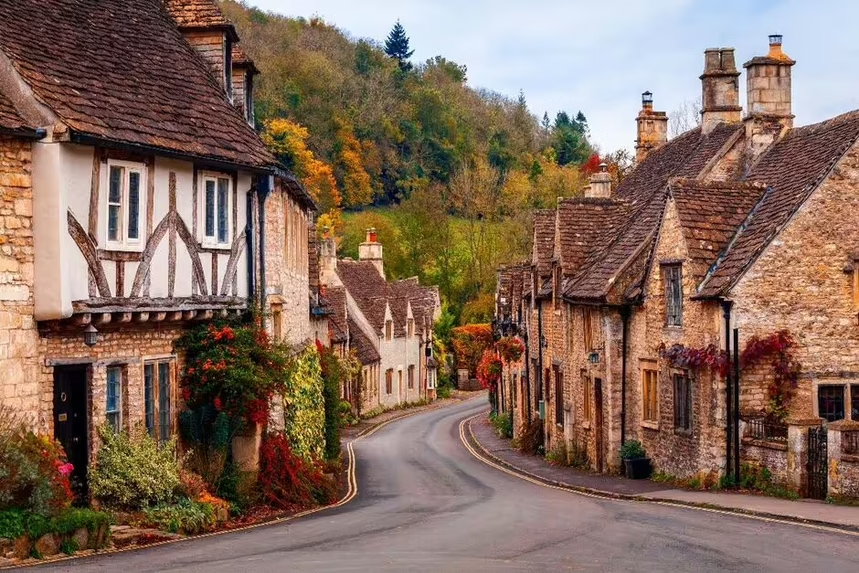
Honey-coloured stone, rolling hills and village greens make the Cotswolds one of the most desirable places to live in England. Yet the region is far from uniform. A village that suits a London commuter may be impractical for a young family, and a quiet hamlet that appeals to a retired couple may feel isolated to someone with children at school.Cotswold Buying Agents spend much of their time matching buyers to the right place, long before they match them to the right house. This guide looks at how different buyer profiles tend to approach the area and what to consider in each case.
Understanding the geography
The Cotswolds stretch across several counties, including Gloucestershire, Oxfordshire, Wiltshire, Warwickshire, Worcestershire and Somerset. Much of the region is designated as a National Landscape, formerly known as an Area of Outstanding Natural Beauty, which means planning controls are tighter and development is limited. That helps to protect the character of the villages, but it also restricts supply, which supports prices and makes well-located homes competitive.
Broadly, the eastern and southern Cotswolds are closer to London and tend to attract commuters. The central and northern areas offer a classic postcard setting, while the western edge looks towards Cheltenham, Gloucester and Stroud, with their own strengths and character.
London commuters
For those who need to travel to London regularly, the railway station is the starting point of the search. Several lines serve the region, and journey times to London Paddington vary considerably between stations. Places such as Kemble, Charlbury, Kingham and Moreton-in-Marsh are often mentioned because they have direct services, though timings and frequency change, so check the current timetable and test the journey at peak times.
What to consider:
• Station access. A village may be only a few miles from a station, but narrow lanes and limited parking can add a surprising amount of time. Check whether you will need to drive or whether a taxi, bicycle or lift is practical.
• Season ticket costs. Rail fares are considerable, so factor them into your running costs.
• Hybrid working. If you are in London two or three days a week, you may be willing to live further away than someone commuting daily.
• Mobile signal and broadband. Working from home depends on reliable connectivity, which can be patchy in rural locations.
Villages and small towns near the eastern side, such as those around Charlbury and Kingham, can be attractive for this group, though competition is strong and the best properties often sell quickly.
Families
Families usually prioritise schools, space and a sense of community. The Cotswolds offers a good mix of state and independent schools, though catchment areas and admissions rules matter, and being close to a school does not guarantee a place. Research current criteria carefully, and speak to the relevant local authority or school directly.
What to consider:
• School travel. Many rural children travel by bus or car. Look at transport routes and the practicality of the daily run.
• Activities and friendships. A village with a primary school, sports clubs and a lively community can make settling in easier.
• Garden and storage. Period cottages are charming but can be compact. Think about space for bicycles, boots and growing children.
• Safety and roads. Some villages sit on busy through routes, which affects noise and road safety.
• Healthcare. Check the distance to GP surgeries, dentists and hospitals.
Towns and larger villages with schools, shops and services in one place, such as Chipping Campden, Burford, Tetbury or Cirencester, often appeal to families because they reduce daily driving, though each has a different character and price level.
Downsizers
Buyers who are moving from a larger home often want to keep the lifestyle they love while reducing the maintenance. They tend to value convenience, community and manageable property.
What to consider:
• Walkability. Being able to reach a shop, pharmacy, pub or church on foot becomes more valuable over time.
• Single-level living. Stairs, steep gardens and uneven paths can be a challenge in later years. Bungalows and ground-floor apartments are rare in the Cotswolds, so competition can be strong.
• Running costs. Old stone houses can be expensive to heat and maintain, and listed buildings carry additional obligations. Consider energy efficiency and the cost of repairs.
• Proximity to family and healthcare. Think about how easily you can reach friends, relatives and medical services.
• Social life. Active villages with clubs, societies and events help newcomers to build connections.
Painswick, Stow-on-the-Wold, Broadway and some of the market towns may appeal here, though the right choice depends on individual priorities.
Weighing the trade-offs
No village is perfect, and each profile involves compromise. A pretty hamlet may be wonderfully peaceful but lack a shop. A busy market town may be convenient but less tranquil. The key is to be honest about how you will actually live, not how you imagine life in the country.
Visit at different times of day and in different seasons if you can. A village that feels idyllic on a sunny Saturday may be very different on a wet Tuesday morning in January. Try the commute, talk to residents and park outside the pub on a Friday night.
How an agent can help
A buying agent with strong local knowledge can shorten this process considerably. They can explain how villages differ in price, character and demand, identify properties before they reach the portals and advise on issues such as flood risk, stone repairs and planning restrictions.
They can also challenge assumptions. You might discover that a less obvious village offers better value, a quicker commute or a friendlier community than the one you had in mind.
Choosing with your priorities in mind
The Cotswolds can offer an exceptional quality of life, but the best results come from matching the place to the person. Decide what matters most, whether that is the commute, the schools or the pace of life, then explore the villages that fit. With patience, good advice and an honest view of your own needs, you can find a place that suits you now and for years to come.