

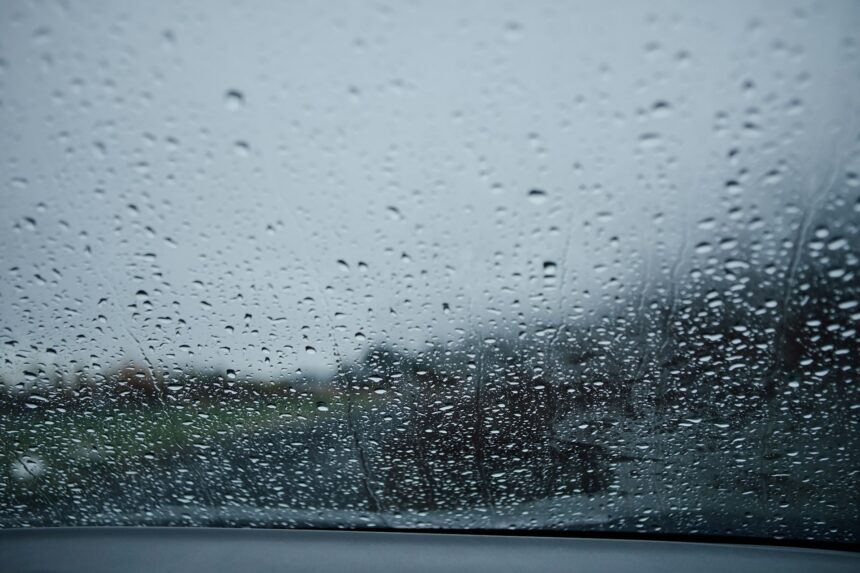
Driving in heavy rain can quickly become stressful when water remains spread across the windshield and visibility starts to deteriorate.
Windshield wipers are the primary tool for keeping the glass clear, but a rain-repellent treatment can provide additional help by making water bead up and move more easily across the surface.
Rain repellents create a thin hydrophobic layer on the windscreen. Instead of spreading into a continuous film, water forms small droplets. At higher driving speeds, airflow can push many of these droplets upward and away from the driver’s field of vision. The effect can make driving in rain more comfortable, but achieving good results depends heavily on how the product is applied.
The most important step actually happens before opening the bottle: clean the windshield thoroughly.
Ordinary washing may remove visible dirt without eliminating oily residue, wax, insect remains or other contamination. These deposits can prevent the rain repellent from bonding evenly with the glass. Clean the windshield carefully and make sure there are no stubborn spots remaining. If necessary, use a suitable automotive glass cleaner and a clean microfiber cloth.
The glass should also be completely dry before application unless the instructions for the particular product say otherwise. Applying a coating over moisture can produce uneven coverage and disappointing results.
Choose an appropriate place to work. Direct sunlight and extremely hot glass can cause some products to dry too quickly, making them more difficult to spread and buff evenly. A shaded area with a reasonably cool windshield is generally more convenient.
Apply a relatively small amount of rain repellent rather than soaking the glass. More product does not necessarily create better protection. Excessive application can simply make buffing more difficult and increase the chance of leaving haze or streaks.
Work systematically across the windshield so that every area receives reasonably even coverage. Depending on the product, this may involve circular or overlapping movements with an applicator or microfiber cloth. Pay particular attention to the edges and corners, which are easy to miss.
After application, allow the product to haze or cure for the amount of time specified by its manufacturer. Then buff the windshield using a clean, dry microfiber cloth until the glass looks completely clear.
This final stage is important. Residue that remains on the windshield may become especially noticeable at night when headlights from approaching vehicles hit the glass. If you notice haze or streaking, continue buffing rather than assuming it will disappear while driving.
Before heading onto the road, inspect the windshield from several angles. Looking through the glass from inside the vehicle is particularly useful because imperfections that are difficult to see from outside may become obvious from the driver’s seat.
Do not forget about the windshield wipers. Old, damaged or contaminated wiper blades can still leave streaks even when the glass has been treated. Clean the blades periodically and replace them when they begin skipping, smearing or leaving areas of water behind.
Rain repellent is not permanent. Its durability depends on the product, weather, mileage, washing frequency and use of the wipers. When water stops forming distinct beads and begins spreading across the windshield again, another application may be appropriate.
There is little advantage in applying extremely thick or frequent layers simply to avoid buying another bottle later. Even when approaching vehicle maintenance from a finance perspective, using the correct amount and reapplying when necessary usually makes more sense than overusing the product.
It is also important to remember what rain repellent cannot do. It does not replace working windshield wipers, good tires or slower speeds in severe weather. During heavy rain, visibility and road grip can deteriorate dramatically regardless of how effectively water beads on the glass.
Applied correctly, however, windshield rain repellent is a simple addition to regular vehicle maintenance. The secret is not using as much product as possible. A thoroughly cleaned windshield, thin and even application, proper curing and careful buffing are what create the clear, water-repelling surface that makes the treatment useful.
Read also How to Repair Your Skin Barrier Naturally