

Research checked September 30, 2026.
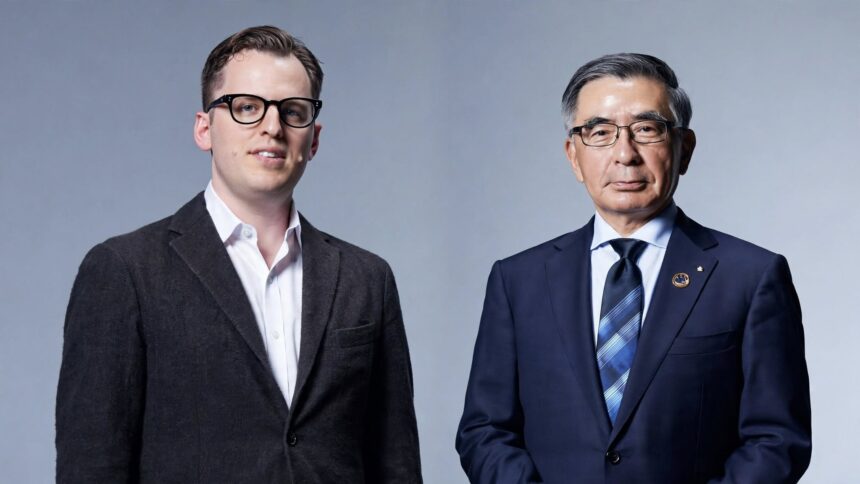
Mike Krieger and Toshihiro Suzuki are business leaders whose careers span different kinds of technology. Krieger co-founded Instagram and later built the news app Artifact before joining Anthropic. Suzuki leads Suzuki Motor Corporation as representative director and president. The company announcements and institutional sources reviewed for this article do not document a direct collaboration between them. Their careers offer a useful comparison: how a software entrepreneur and a manufacturing executive approach developing products at scale. Understanding their actual roles also clears up an important distinction between founding a digital platform and leading an established global manufacturer. anthropic.com
Mike Krieger and Toshihiro Suzuki at a glance
| Detail | Mike Krieger | Toshihiro Suzuki |
|---|---|---|
| Best-known work | Co-founder and former CTO of Instagram | President of Suzuki Motor Corporation |
| Organizations in the cited career record | Instagram, Artifact, Anthropic | Suzuki Motor Corporation |
| Role described in a 2026 company announcement | Moving into Anthropic’s Labs team alongside Ben Mann, announced January 13 | Representative director and president; chairman of the board, listed June 25 |
| Main product context | Social media, news personalization, AI applications | Automobiles, motorcycles, and other mobility products |
These roles are documented in Anthropic’s appointment and Labs announcements and Suzuki’s corporate and board records. anthropic.com
Mike Krieger: From mobile photos to AI products
Krieger’s best-known achievement began with a specific consumer problem. He and Kevin Systrom launched Instagram in late 2010. Stanford’s account of their early work describes three frustrations the founders sought to address: mobile photos could look disappointing, uploads could take too long, and sharing images across services was cumbersome. The founders tested their assumptions by putting the product in front of early users. Stanford Technology Ventures Program
That history places Krieger’s product background in everyday usability. His early work joined software engineering to the practical details of taking, uploading, and sharing a picture. Anthropic later identified him as Instagram’s co-founder and chief technology officer when announcing his appointment in May 2024. anthropic.com
Artifact connected his startup work to artificial intelligence
Krieger and Systrom subsequently created Artifact, an AI-driven news discovery platform. Yahoo announced its acquisition on April 2, 2024, and said the transaction had closed on March 29. Its announcement identified Krieger as Artifact’s CTO and explained that the app’s personalization technology would be integrated into Yahoo products. Yahoo Inc.
The distinction matters: Yahoo acquired Artifact, a separate venture from Instagram. The deal continued Krieger’s work on software that helps people find and interact with content, this time through personalized news recommendations.
His Anthropic role changed in 2026
Anthropic hired Krieger as chief product officer on May 15, 2024, overseeing product engineering, management, and design. On January 13, 2026, it announced his move to Labs alongside Ben Mann, with Ami Vora leading the Product organization. anthropic.com
Anthropic described Labs as a team for incubating experimental products around Claude’s capabilities. The announcement updates the responsibilities described in Krieger’s 2024 appointment. anthropic.com
Toshihiro Suzuki: Leading an established manufacturer
Toshihiro Suzuki became Suzuki Motor Corporation’s representative director and president, with the COO designation, on June 30, 2015. The company’s announcement listed his previous position as representative director and executive vice president, with responsibilities involving support for the CEO and global marketing. Global Suzuki
Suzuki’s June 25, 2026, board announcement lists him as representative director and president and identifies him as chairman of the board of directors. The company’s products include automobiles, motorcycles, and outboard motors, making his leadership remit broader than passenger cars alone. Global Suzuki
What Suzuki’s latest strategy calls for
Suzuki’s September 25, 2026, technology strategy set three targets for 2030: halve new-vehicle development lead time, improve development efficiency by 30%, and improve manufacturing efficiency by 50%. It identified digital engineering, modularization, and concurrent engineering and manufacturing development as tools for reaching those goals. Global Suzuki
The strategy also targets approximately 4 million units of annual production capacity in India in fiscal 2030 and beyond. These figures describe future goals. Global Suzuki
The useful comparison: How each business develops products
Anthropic’s Labs plan emphasizes experimentation and user testing; Suzuki’s strategy coordinates engineering with manufacturing to accelerate product introductions. anthropic.com
Read together, those plans suggest a shared concern with getting useful products to customers faster. Software experiments and vehicle production involve different practical constraints. This comparison is an interpretation of the published plans; it does not establish a shared personal management philosophy or professional relationship between the executives.
What U.S. readers should know about Suzuki
Suzuki’s global automotive business should be distinguished from its American operations. In November 2012, the company announced that its U.S. subsidiary would wind down its continental U.S. automobile marketing business and concentrate on motorcycles, ATVs, and marine products. That announcement preceded Toshihiro Suzuki’s appointment as president in 2015. Global Suzuki
Suzuki’s U.S. website continues to direct customers to its motorcycle, ATV, and marine businesses. Its American presence also includes manufacturing: on June 13, 2024, Suzuki Motor USA announced that its Rome, Georgia, facility had built its 500,000th ATV. suzuki.com
For American readers, that context prevents a misleading conclusion that Suzuki’s departure from new-car distribution meant the entire brand left the United States.
Frequently asked questions
Who co-founded Instagram with Mike Krieger?
Kevin Systrom. Stanford identifies Systrom and Krieger as the founders who launched Instagram in late 2010. They also created Artifact together. Stanford Technology Ventures Program
What happened to Artifact after Yahoo acquired it?
Yahoo’s acquisition announcement said Artifact would cease operating as a standalone app and that its AI personalization technology and other features would be integrated across Yahoo, including Yahoo News. Yahoo Inc.
Where is Suzuki Motor Corporation headquartered?
Suzuki Motor Corporation’s head office is in Hamamatsu, in Japan’s Shizuoka prefecture. Toshihiro Suzuki leads the Japanese parent company. Global Suzuki
Are Suzuki’s 2030 efficiency figures current results?
No. They are goals for 2030. The India production-capacity figure is also a future target. Global Suzuki
Conclusion
Krieger’s career offers a case study in developing digital products across social media, news, and AI. Suzuki’s career offers a view of leadership within a global manufacturer. Comparing their documented responsibilities is useful; attributing a partnership or shared personal philosophy to them would go beyond the evidence presented here.
Read also Riproar Business: A Guide to Its News and Practical Insights