

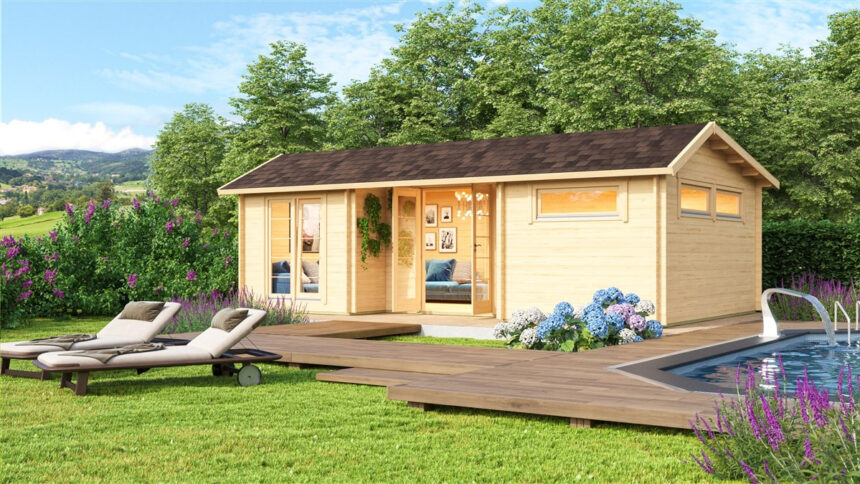
As the cost of living rises, people are increasingly looking for alternative options to make it more affordable, and interest in tiny homes and log cabins continues to grow. Many people are looking for an alternative to traditional living, which comes with high mortgage or rental costs, and we have a stunning range of log cabins that offer flexible and stylish accommodation.
Can You Live in a Log Cabin Permanently in Ireland? Planning and Building Regulations Explained
As the cost of living rises, people are increasingly looking for alternative options to make it more affordable, and interest in tiny homes and log cabins continues to grow. Many people are looking for an alternative to traditional living, which comes with high mortgage or rental costs, and we have a stunning range of log cabins that offer flexible and stylish accommodation.
However, it is important to understand the laws around living in a garden building or log cabin in Ireland, and to ensure that your plans will be permitted under local housing and development legislation. You will need to consider planning permission requirements and building regulations separately, and we can help you to find out whether you will be able to use your garden room as permanent accommodation.
Do log cabins need planning permission in Ireland?
This year in Ireland, there have been some major changes to the planning rules for garden buildings, and these affect residential use. Since 27th July 2026, new rules have come into place, and these allow exemptions from the previous rules until 31st December 2030 – so this is a great time to install your garden room.
It is now possible to build a live-in home of up to 45 square metres in your back garden without planning permission, and this is a significant change to the previous rules. The size limit for garden rooms and sheds has also increased to 30 square metres, but the change that allows for full-time living enables you to build ‘a detached, liveable garden home of between 32 and 45 square metres in your back garden without planning permission’.
This exemption is known as Class 3A, and refers to dwellings built in rear gardens, rather than on separate parcels of land. If you are planning to build a log cabin on your own land as a primary dwelling, you will need to consider planning permissions and building regulations and apply for these if they apply in your situation.
Can I build a log cabin to live in?
In theory, you can live in any building that meets the planning and building regulations in your local area. If you own land and you are planning to build a new home, you will need to meet the requirements for residential developments, and this means that you will need to obtain planning permission for any development that is not exempt.
Many log cabins and garden rooms are described as ‘suitable for residential use’, and this is because they can be lived in on a permanent basis. This does not, however, mean that it is possible to simply construct a log cabin home without permission. The site you choose for your cabin will affect whether or not it is permitted as a liveable home, and current regulations make this a much simpler process when building in the back garden of an existing property than when building a separate dwelling.
When assessing a site that requires planning permission, your local authority will consider the location and characteristics of your site, as well as access, wastewater arrangements, design, environmental considerations and your architect’s plans.
Planning permissions for log cabins
If you are considering building a log cabin for living in on a permanent basis, you will need to investigate planning permissions carefully to ensure that your development will be permitted. Your building plans may be subject to a planning exemption, such as the current exemption that allows you to install a garden home for permanent living accommodation provided it is up to 45 square metres in size and located in your back garden.
If you are hoping to build a standalone log cabin, you will need to apply for planning permission in the same way as if you intended to build a traditional brick or block house. You will need to confirm the location and size of your site, the site layout, the type of building you wish to build, access and parking arrangements and wastewater treatment plans. You will be asked for details of the proposed use of your log cabin, and will be required to submit relevant drawings and supporting information for your application.
It can be helpful to talk with your local planning department about the likelihood of your application being accepted, and in some cases it may be possible to obtain advice on understanding the requirements so that you are more likely to be successful.
Log cabins in rural areas
When you are planning to build a log cabin, the location you intend to build in is a vital factor in whether you will legally be allowed to live in your cabin permanently. Owning a piece of land does not give you the right to build a house on it, and this must be applied for separately, unless you are building a separate home in the garden of your existing home, in which case you will not need planning permission, subject to current exemptions.
In Ireland, the rural housing planning policy encourages people with an economic or social need who are intrinsic to rural communities to build homes in rural areas. In areas of population decline, there are also special conditions that enable people wishing to build a home to do so if they are subject to normal planning and environmental rules. This means that there is a certain amount of flexibility in the rules and you may be allowed to construct a new home if you meet specific conditions. Local planning policy and the type of site you wish to build on will have a big influence on planning decisions, and you should ensure that you will be permitted to build before you purchase a log cabin home.
While planning permission is required to establish that the proposed installation is acceptable in the proposed location and site, building regulations address the design and construction of the proposed build. Both apply to the construction of residential homes and log cabins in Ireland, and will include aspects such as environmental impact and safety.
Can I build a log cabin in my garden?
In short, yes. Current planning exemptions in Ireland allow for the construction of garden homes and log cabins of up to 45 square metres to be used as permanent living accommodation. These can include kitchen, bathroom and sleeping facilities, and many people build this type of accommodation for their elderly parents or young adult children to live in.
High Quality Log Cabins in Ireland
At Gardenhouse 24, we have a stunning selection of log cabins that are suitable for permanent habitation. Many of these are multi-room designs that can provide practical, flexible living accommodation on a full or part-time basis. You’ll find our full range of designs on our website, and we can help you to choose the best options for your property and your budget.
We have many years of experience designing and installing garden rooms, and we offer an additional installation service for the ultimate in convenience. You can use your garden room or log cabin to provide extra accommodation or as a home gym, garden office or games room, and we also offer luxurious sauna cabins. Talk to our friendly team today to find out more.